


Robot lawn mower no wire is now the benchmark for smart, hands-off lawn maintenance, but buyers considering boundary-free models face real-world trade-offs on accuracy, cost, and reliability. If you want structured mowing patterns and premium convenience (without digging or laying a single wire), you need to understand the facts—before you swap your traditional setup for the latest RTK GPS and AI-driven mower.
Key Takeaways
- Modern boundary-free robot mowers use RTK GPS and AI for virtual boundaries and obstacle avoidance—delivering high accuracy, but require a clear sky view and cost more upfront.
- Key pain points include inconsistent mowing in low light, GPS dropouts under trees, app control limitations, and lack of cost transparency (including subscriptions or installation).
- Premium models now offer app-controlled mapping, centimeter-level accuracy, and support for large, multi-zone yards—but carefully match features and specs to your property’s needs.
- Why choose a robot lawn mower no wire — expectations vs reality
- How modern wire-free navigation works (RTK GPS + AI + sensors)
- Real-world accuracy and limits — what centimeter-level really means in your yard
- Obstacle avoidance — AI vision, LiDAR and the low-light problem
- Pain points from real users who switched from perimeter wire
- What top-ranking reviews and competitor articles ignore (unique insight)
- Buying checklist — specs to match to your yard and use-case
- Cost and coverage examples — what to expect for small, medium, and large yards
- Quick model callouts (2025) — who to consider and why
- Short troubleshooting & support checklist (what to test during trial and first month)
- Conclusion — clear recommendation framework for purchase decision
- FAQ
Why choose a robot lawn mower no wire — expectations vs reality
Boundary-free robot mowers have become the gold standard in 2024 for homeowners tired of installing or repairing perimeter wires. The key reasons to upgrade: fast, mess-free setup (no digging), flexible virtual boundaries (changeable via app), and smarter, structured mowing patterns for complex yards. But there’s a trade-off—these mowers cost more up front, with most reputable models ranging from €1,000 to €2,500, compared to wired mowers that run €700 to €1,600.[2]
Boundary-free robot mowers reduce the pain of landscape changes—adding or removing flower beds or play equipment means a quick virtual re-map, not a full rewire. However, setting up digital boundaries and tuning app maps can still take several hours (sometimes more for complex, multi-zone yards). If you expect complete “set and forget” performance, set your timeline and cost expectations realistically: you’re paying for premium smart convenience, but you’ll need patience during that first mapping week.
How modern wire-free navigation works (RTK GPS + AI + sensors)
Today’s best boundary-free robot mowers use a combination of precision navigation technologies: RTK GPS, visual SLAM (VSLAM) cameras, LiDAR, ultrasonic sensors, and often a dedicated base station. Here’s how they work together:
- RTK GPS: Delivers satellite-guided navigation and virtual boundaries accurate to ±1–2cm, so the mower can follow crisp lines even at your lawn’s edge.[3]
- AI Vision (VSLAM): Uses onboard cameras to recognize obstacles (toys, trees, pets) and “see” the environment for real-time corrections.
- LiDAR: Adds 3D scanning, helping the mower understand complex shapes and avoid collisions—even if the grass is long or the light is low.
- Sensor Fusion: Premium models combine all these inputs to stay on track, even when trees or buildings weaken GPS.
Hybrid navigation stacks (like Mammotion’s Tri-Fusion, Segway Navimow’s RTK + VisionFence, and Husqvarna EPOS systems) now routinely achieve ±1–2cm accuracy in real-world yards—closing the gap to wired edge performance.[4]
Real-world accuracy and limits — what centimeter-level really means in your yard
Lab tests report that the latest RTK GPS and hybrid AI models hold boundaries within ±1cm to ±2cm. In practice, this means most robot mowers now cut almost as precisely as wired models, even along curves or close to patios. However, keep this in mind:
- RTK Signal Needs: The mower needs unobstructed satellite line-of-sight. Tall trees, rooflines, or dense foliage can block the RTK signal—expect minor drifting near very shaded zones.[8]
- Recovery Modes: When GPS drops, hybrid mowers rely on cameras and proximity sensors to get home. Performance under tree canopies can drop, especially if the unit loses its “lock.”
- Multi-Zone Mapping: For yards broken up by hardscapes, pools, or multiple lawns, ensure your mower/app supports zone-by-zone mapping.
In testing, EPOS/RTK systems kept the mower on track but could be hampered by tree cover—a limitation if your lawn has substantial mature trees.[5] Coverage claims (e.g., 1,000–7,500 m²) assume good visibility from the base station or correction antenna—so check your site before you buy.
Obstacle avoidance — AI vision, LiDAR and the low-light problem
Robot mower obstacle avoidance performance depends on the sensor suite:
- Camera-only: Vision excels in full daylight and for pet/toy recognition—but struggles in low-light, evening, or with indistinct obstacles. Many camera-only models may wander or stop during dusk.
- LiDAR: Performs well for 3D objects and works day or night, but can get confused by intricate root systems, rough stones, or thick grass.
- Hybrid Approaches: The best new mowers combine vision and RTK, or Tri-Fusion (LiDAR + Vision + RTK) for maximum reliability in all light conditions and terrains.[3]
In user testing, hybrid RTK + Vision systems provided the best overall obstacle detection and edge accuracy, even as daylight faded.[6] Still, occasional “stuck” events on roots or in tall, wet grass are not uncommon—virtually all systems may require manual rescue at least once per season.
Pain points from real users who switched from perimeter wire
- Low-light inconsistency: Camera-based navigation can fail at dusk, causing unfinished mowing cycles.
- Stuck incidents: Units may get wedged on tree roots or in deep shrubbery—manual reset needed.
- GPS signal loss: Mowers may drift or quit mowing if satellite connection drops under heavy trees or building shadows.
- Long mapping/setup: Initial digital mapping and tuning is time-consuming, leaving some frustrated with out-of-the-box performance.
- App glitches and weak support: Many users cite bugs or unintuitive controls in early software versions and limited online resources.
- Higher upfront costs: Subscription fees for RTK or app upgrades, plus installation, can surprise buyers expecting plug-and-play pricing.
Some user reviews mention that switching to a boundary-free robot mower fixed maintenance headaches, but came with a learning curve and a few costly surprises.[10]
What top-ranking reviews and competitor articles ignore (unique insight)
- Total Cost of Ownership: Many reviews skip ongoing network fees—budget both hardware and any required subscriptions for RTK/EPOS corrections, plus pro-install/support if needed.
- App Control Depth: Nearly all buyers want reliable autonomous lawn mower app control—demand mapping, multiple zone support, over-the-air firmware updates, and strong anti-theft/geo-fencing features. Test usability, not just features listed.
- Coverage Guarantees: Insist on honest area specs for “robot mower large yard” performance. Models suited for 1,200m² may struggle on 5,000m²+ lawns, especially with complex edges.
Make sellers disclose exactly what’s included—some brands charge extra for premium app features, fast support, or network unlocks. If you want to integrate with other smart home tech (like a smart thermostat or outdoor solar lights), check for open standards and app integrations up front.
Buying checklist — specs to match to your yard and use-case
- Required accuracy: Centimeter-level guide (±1–2cm) if you have narrow strips, elaborate landscape beds, or expect clean edge lines.
- Sensor suite: Choose hybrid RTK/AI/LiDAR for best reliability on larger, more complex, or tree-shaded properties.
- Multi-zone/virtual mapping: Essential if you have split lawns or need to skip certain play or garden areas.
- App features: Look for robust mapping, schedule controls, anti-theft, virtual no-go zones, and remote steering.
- Infrastructure: Can you mount the RTK base station in full sun with unobstructed views? Double-check before purchase.
Premium boundary-free models now span 1,000–7,500m², covering almost all suburban and estate lawns—choose RTK/Hybrid technology for reliable, multi-zone large property mowing.[1]
Looking for more home upgrades? Boost your home’s efficiency and value with net-zero ready home tips, garage organization systems, or a biophilic outdoor design.
Cost and coverage examples — what to expect for small, medium, and large yards
| Yard Size | Recommended Navigation | Example Models | Capacity | Expected Price (w/ extras) |
|---|---|---|---|---|
| ≤1,200m² | Camera-only / Mid-range GPS | Worx Landroid Vision | ~1,000m² | €1,000–€1,500 |
| 1,200–5,000m² | RTK-enabled (AI/Hybrid) | Segway Navimow H or Mammotion LUBA | 3,000–5,000m² | €1,300–€2,000 |
| 5,000–7,500m² | 4WD RTK+VSLAM hybrids (w/ base or network RTK/EPOS) | Mammotion LUBA 3 AWD, Sunseeker Elite X9, Husqvarna Automower with EPOS | up to 7,500m² | €2,000–€2,500+ (plus installation, possible subscription) |
Wire-free models now target everything from townhouse lawns to multi-acre estates. But extra costs—like RTK base stations, in-app upgrades, or installation—can add €150–€600 or more over the sticker price.
If you’re investing in drought-smart landscaping, don’t miss our WaterSense fixtures savings guide or proven smart pergola solutions for better outdoor living.
Quick model callouts (2025) — who to consider and why
- Best budget boundary-free: Worx Landroid Vision — camera-only, no RTK base needed. Pro: affordable, simple setup. Con: limited in low light; capacity up to 1,000m². [4]
- Tech-first: Segway Navimow H series (RTK + VisionFence); pro: robust app, structured mapping, anti-theft. Con: needs base station with sky view, can cost more with extras.
- Large property: Mammotion LUBA 3 AWD (Tri-Fusion sensors, 4WD, up to 7,500m²). Pro: handles slopes, multi-zones, max precision. Con: advanced features have learning curve and price premium.
- Max-precision pro: Husqvarna Automower with EPOS (Satellite RTK). Pro: Commercial-grade RTK, multi-zone, high accuracy. Con: most complex setup, highest cost; often requires pro installation/support contract.
- Estate-scale: Sunseeker Elite X9 (RTK + VSLAM + 16 sensors). Pro: targets 6-acre properties, drone-like navigation. Con: not for small yards; price is at high end.
Always confirm if multi-zone, app remapping, firmware OTA, and RTK base/network are included—or extra.
Short troubleshooting & support checklist (what to test during trial and first month)
- Run mowing cycles at dawn, midday, and dusk—test navigation in all lighting.
- Deliberately guide your mower under tree canopies and beside tall buildings—observe RTK signal loss, drift, or recovery.
- Place small and large obstacles (toys, hoses, garden decor) in path—confirm reliable detection and avoidance.
- Map custom virtual no-go zones and multi-zones in the app—verify accuracy and workflow.
- Trigger a “manual rescue” by letting the mower get stuck (roots, thick mulch)—practice remote override or error code recovery.
- Document all issues (photos or video); log app/software quirks for warranty/return support.
Read the spec sheet: some systems require the mower to always “see” its base, especially in edge zones. Remember, vision-only units can struggle after sunset, and RTK systems require consistent sky view.
Conclusion — clear recommendation framework for purchase decision
Boundary-free robot mowers now match or beat most expectations for hassle-free, precision lawn care. To choose the right system: start with a realistic profile of your yard (size, tree cover, zones), select the required navigation accuracy and sensors (RTK + hybrid for most lawns), prioritize robust app control and total cost transparency, and review recent real-user feedback. Test thoroughly during the trial window, and never accept unclear pricing or hidden subscription fees.
The premium robot lawn mower no wire choice is accurate, reliable, and flexible—if you demand price clarity and test for app fit and yard compatibility. Ready to take the plunge? Run the trial checklist, secure all costs in writing, and enjoy next-gen mowing!
FAQ
Does a robot lawn mower no wire really work on complex or multi-zone yards?
Yes, top models with RTK GPS and hybrid sensor suites can handle complex, multi-zone layouts. You’ll need to use the app to set up each section, and results depend on signal strength and app capabilities. Always check area specifications and user reviews for proof.
What happens if my yard has dense tree cover or poor satellite visibility?
Performance may suffer. The mower can lose GPS lock, drift, or pause. Hybrid models that combine RTK, VSLAM, and LiDAR minimize these issues, but you should expect occasional manual intervention under dense trees.
Are there recurring costs for boundary-free robot mowers?
There can be. Some models require an annual subscription for RTK or network correction services. Others may charge for premium app features or installation. Always look for price transparency before buying.
How do I set virtual boundaries?
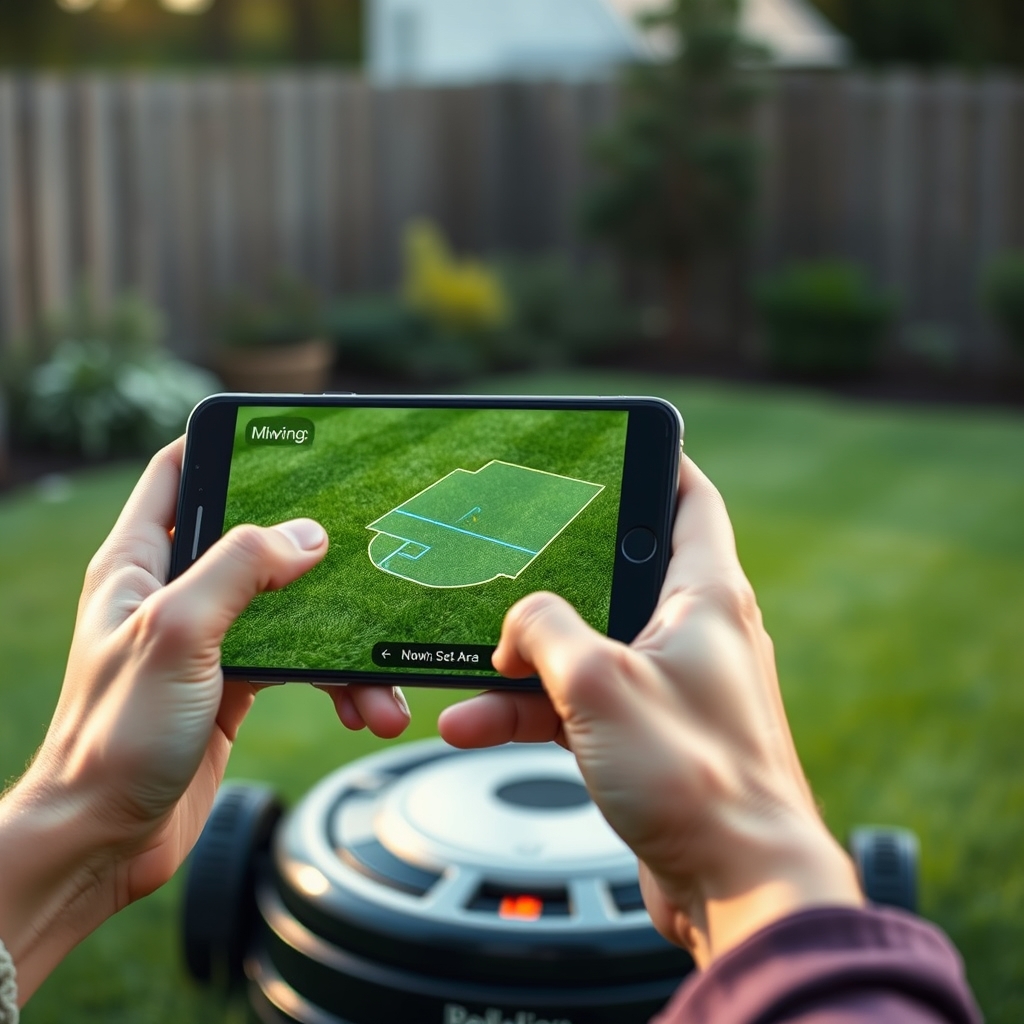
Most mowers let you “walk” the boundary with your phone and drop digital pins via the app. You can create custom zones, no-go zones, and adjust maps as your landscape changes.
How do I get the most from my new mower’s app control?
Test mapping, scheduling, obstacle detection alerts, and over-the-air updates. Look for robust support, clear error messages, and fast customer service. If integration with other smart home devices matters, check compatibility before you buy.
—