


Table of Contents
Pet anxiety calming products are an essential toolkit for pet parents wanting to handle storm or separation anxiety quickly, safely, and effectively. If you’re time-pressed and want real results, this detailed guide breaks down the options—from pheromone diffusers to calming chews, collars, and more—using real clinical data, safety flags, and actual user complaints so you can choose the right solution for your dog or cat with confidence.
Key Takeaways
- Pheromone diffusers show the strongest clinical evidence for reducing anxiety behaviors, especially in the home, while collars and chews show mixed results. Layering multiple tools works best [4].
- Many products are effective only when matched to the right trigger (e.g., storms, separation) and your pet’s needs. Side effects and user complaints vary widely by product type.
- Always check for safety issues—especially for CBD products and supplements. Consult your vet if your pet is on medication or shows severe anxiety.
Quick overview — What actually works for pet anxiety (summary)
If you’ve scanned product aisles or online lists of pet anxiety calming products, you already know options seem endless. Here’s the bottom line from clinical research and real-world feedback:
- Pheromone diffusers (like Adaptil or Feliway) show statistically significant reductions in anxiety-related behaviors across multiple studies, especially for dogs or cats anxious at home or during separation [4].
- Calming collars and chews (treats, supplements) deliver mixed results—some pets show rapid improvement, others little change [5]. Effectiveness depends on the anxiety trigger and your pet’s biology.
- Layering (combining) products is the emerging best practice: pairing, for example, a pheromone diffuser with a pressure vest or calming chews typically works better than using any product alone.
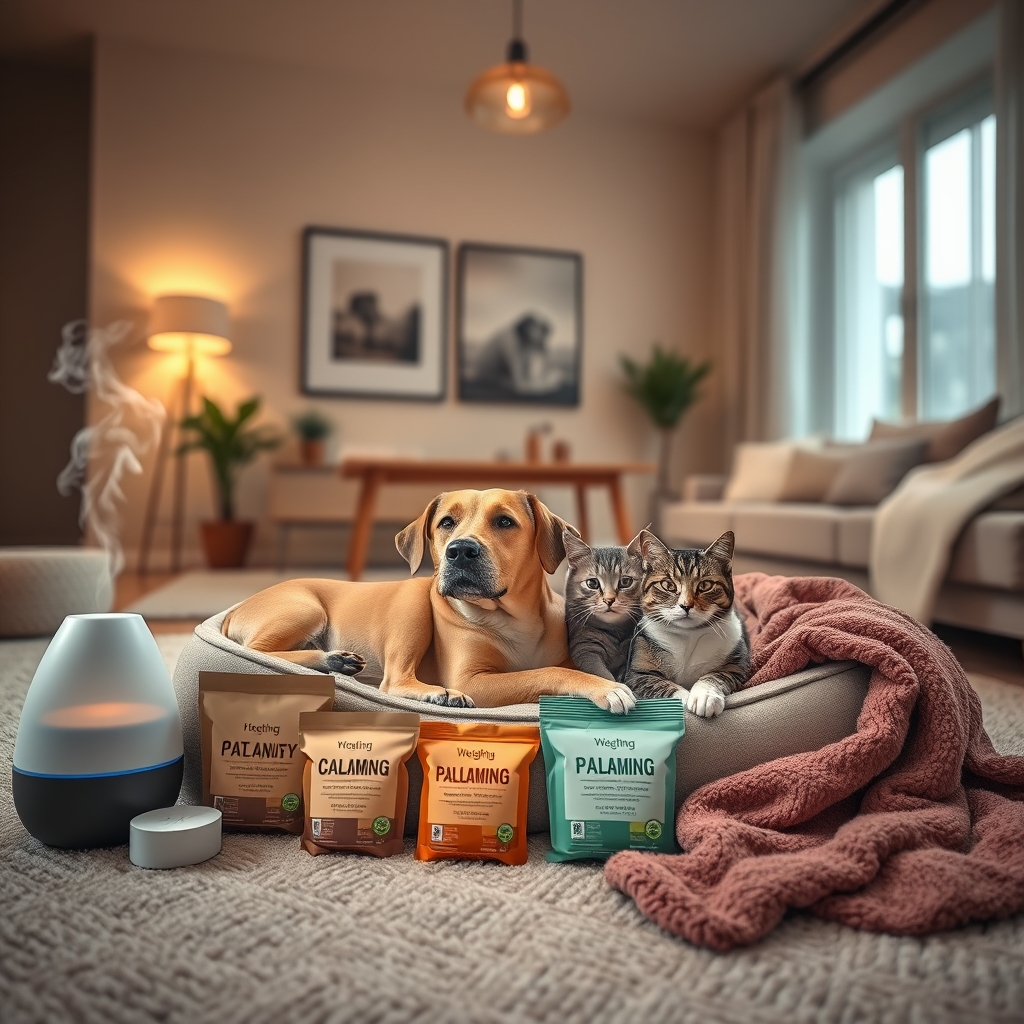
It’s important to set realistic expectations: No product is a miracle cure. Track your pet’s response over 1–3 weeks and be ready to adjust your strategy as needed.
If you’re interested in other ways to upgrade your home for well-being and efficiency, check out our simple guide to cutting water bills with WaterSense fixtures.
How calming products work (mechanism & use cases)
Each product class works on a different mechanism, so picking the right match matters. Here’s what the science says:
- Pheromone diffusers/sprays: Release natural chemicals (like the pheromones a mother dog or cat produces) that signal safety and calm to your pet’s brain. Great for separation anxiety, multi-pet households, or when stress is linked to a specific location [9].
- Pressure vests (Thundershirt dog anxiety vest): Mimic gentle swaddling, applying constant pressure that soothes nerves—helpful for noise, storm, or travel anxiety.
- Calming chews/supplements: Act on brain neurochemistry (e.g., boosting serotonin, or increasing GABA for calming effects). Ingredients include L-theanine, melatonin, tryptophan, and various herbal blends.
- CBD dog treats: Target the endocannabinoid system, which can moderate mood and response to stress. Fast-acting but closely linked to dosing and possible interactions.
- Calming collars: Release pheromones or herbal scents (lavender, chamomile)—portable for travel, walks, or car rides.
- Beds/mats: Provide comfort, thermal regulation, and a secure “den-like” place that encourages relaxation—especially helpful for mild situational stress.
For a deeper dive on technology, see our guide to the latest smart anxiety-relief pet beds.
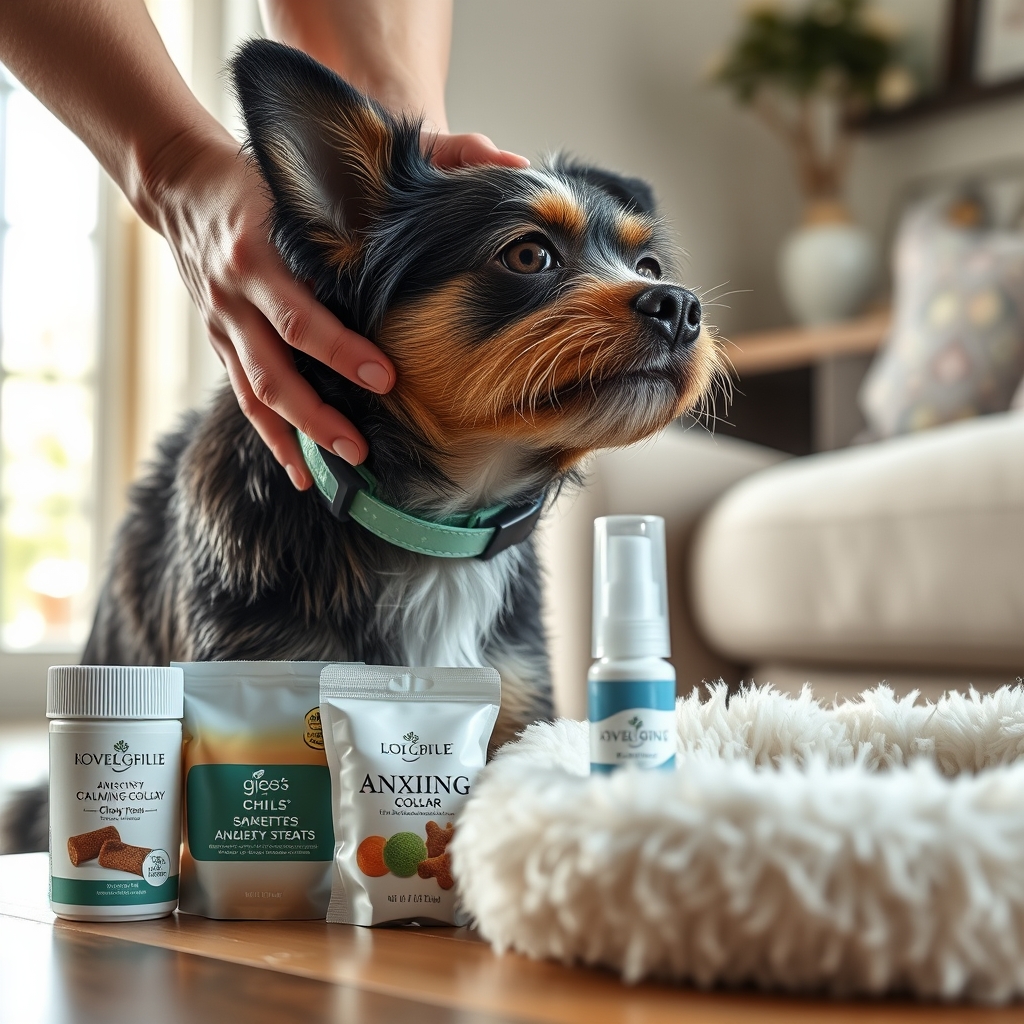
Timing and effectiveness:
- Calming chews work fast (30–60 minutes), but their effects can wear off in 2–4 hours.
- Diffusers and collars need ongoing exposure—usually 24–48 hours for full effect, but more consistent daily relief for chronic anxiety.
- Pressure vests provide immediate calm during wear but need the right fit and break-in period.
Pheromone diffusers and sprays — evidence, pros & cons
Pheromone diffuser cats and dog products are among the most scientifically validated pet anxiety calming products available today.
- Clinical results: Across five published studies, synthetic pheromone diffusers produced statistically significant reductions in anxiety-related behaviors, especially when anxiety was tied to a specific location like the home [4].
- Use cases: Best for separation anxiety, introduction of new pets/people, or hospital stays [9].
- How to use: Plug in near your pet’s main resting area; most brands recommend ongoing use for best effect.
Pros:
- Low risk, especially compared to supplements or CBD.
- No known drug interactions.
- Can be layered with other tools.
Cons:
- May be less effective for noise-based anxiety or severe panic.
- Some pets may ignore the scent entirely.
For environmental comfort, some pet owners also layer anxiety diffusers with memory foam dog beds.
Calming chews and supplements — effectiveness & side effects
Interest in dog anxiety calming chews and the best calming supplement for dogs 2025 is rising, but the science is mixed:
- Ingredients: Look for L-theanine, L-tryptophan, melatonin, or herbal blends (e.g., chamomile, valerian) for evidence-backed calming effects [2].
- Clinical evidence: Some peer-reviewed trials show mild reductions in anxiety, while many rely on owner-reported improvements. Chews tend to act quickly but effects are often temporary, lasting 2–4 hours [5].
- Side effects: Gastrointestinal upset (soft stool, vomiting), sedation, or food refusals are the most commonly reported negatives.
Real-user quote (paraphrased): “My dog seemed calmer for a couple hours, but after that, the effect wore off and she was back to barking at every sound.”
Bottom line: Always consult your vet if your pet is on medication or has health issues before starting new chews or human-grade supplements. Not all pet supplements are well regulated.
Looking to create a calming space for your pet? Adding biophilic design elements at home can lower stress for people and pets alike.
CBD dog treats for anxiety — what the evidence and safety data say
The popularity of CBD dog treats anxiety products has skyrocketed. But what does research say about their efficacy and safety?
- Recent studies show owners most commonly report sedation and increased appetite after CBD use [7].
- Effectiveness: Some anxiety and behavior improvement is reported, but robust clinical trials remain limited.
- Critical safety concern: CBD CAN INTERACT WITH OTHER MEDICATIONS (such as seizure or pain meds) and may affect dose requirements [10]. Always consult your vet before use—especially if your pet takes any prescription drugs.
- Side effects: Sedation, diarrhea, or rare vomiting are reported. Some pets seem “out of it” for several hours.
Real-owner quote: “After a CBD chew, my dog eats with more enthusiasm, but sometimes he just wants to sleep all afternoon.”
Do not mix CBD treats with other calming supplements without a vet’s advice and avoid human CBD oil, which may carry unsafe additives for pets.
Calming collars — portability, efficacy, and common user complaints
Calming collar dog choices abound, promising 24/7 on-the-go scent therapy. Here’s the evidence:
- Mechanism: Collars release calming pheromones or essential oils slowly over 30–45 days, providing all-day exposure, especially useful for travel or dog walks.
- Efficacy: Results are mixed—some owners see real benefits, while others notice little to no improvement [5].
- Complaints: The most frequent negative reviews are about strong (or “chemical”) odors and poor collar fit, leading to collars falling off or causing chafing. Some pets try to chew them off, while others develop mild skin irritation.
Real-user quote: “The smell was too strong for me and my dog, and it didn’t fit well—she managed to shake it off in the park.”
For upgraded comfort during travel, complement collars with car-friendly cooling products for pets and familiar blankets or mats.
Pressure vests (Thundershirt & equivalents) — clinical support and practical tips
Devices like the thundershirt dog anxiety vest apply gentle, even pressure—think of it as a pet “hug shirt.”
- Use cases: Most effective during storms, fireworks, car rides, or visits to the vet when extra physical security helps.
- Evidence: Frequently recommended by trainers and vets as part of a multi-layered anxiety plan [5]. Not a stand-alone cure, but a powerful adjunct to training or pheromones.
- Tips: Ensure proper sizing and introduce gradually—practice during calm times before a high-stress event. Remove in hot weather to prevent overheating.
Vests work well with positive training, treats, or even parallel desensitization exercises for stronger results. Explore more smart upgrades for relaxation in our pet bed buying guide.
Calming beds & mats — comfort, evidence, and purchase tips
While not strictly medical, a calming dog bed for anxiety can offer major support for mild to moderate stress. Owners consistently report:
- Beds with bolstered sides and soft, nestable texture make pets feel safer, encouraging better sleep and relaxation.
- Most calming beds do not actively “treat” anxiety but enable pets to relax and self-soothe—often used alongside chews or pheromone products.
- Retailer feedback is strongly positive: “The bed is now my dog’s go-to spot whenever she’s nervous or there’s a thunderstorm.”
Best practice: Choose beds with washable covers, non-slip bases, and cooling or warming options as appropriate for your region. Durable memory foam options also benefit senior dogs with joint issues. See our reviews of orthopedic beds for joint pain relief.
For a more tech-driven approach, consider smart beds with temperature control.
Side-effect and safety roundup (by product type)
| Product Type | Common Side Effects | Major Safety Notes |
|---|---|---|
| Calming Chews/Supplements | Soft stool, GI upset, sedation, rare allergic reactions | Monitor for lethargy or disinterest in eating. Avoid combining with meds without vet approval. |
| CBD Dog Treats Anxiety | Increased appetite, sedation, diarrhea, rare vomiting | High risk for drug interactions. Only use under vet guidance. |
| Pheromone Diffusers & Sprays | Extremely low (<1%) side effect rate. Rare allergic reaction in humans (headache). | No drug interactions. Safe for multi-pet homes. |
| Calming Collars | Odor irritation, skin chafing, fit issues, occasional vomiting if chewed | Not safe for chewers. Remove if skin rash develops. |
| Pressure Vests | Overheating, restriction of movement if poorly fitted | Remove during warm weather. Do not leave on for >8 hours at a time. |
“Most common CBD side effects reported by owners are increased appetite and sedation; CBD may interact with other drugs. Pheromones show low-risk profiles and measurable efficacy” [7], [4].
Real-life complaints from retailers & review sites — what buyers actually say
- Dog anxiety calming chews: Some users see calming effects quickly, but many complain about “no change” or inconsistent duration—especially for severe anxiety.
- Calming collar dog: Dissatisfaction often centers on strong smell (“smells like cleaning fluid,” “my pet hated it”) and poor fit, with several users reporting collars that slip off or cause irritation.
- Calming beds: Generally praised for improved settling and comfort. “Our dog runs for her bed when she hears thunder.”
- Pheromone diffusers: Mostly positive comments about steady, subtle effectiveness—less barking or hiding during storms or when left alone.
Summary: Chews and collars are hit-or-miss, while beds and diffusers have more consistent positive reports. Many owners end up combining products over time for best results.

How to choose & layer products — recommended stepwise protocol
If you want to maximize the impact of pet anxiety calming products and the best calming supplement for dogs 2025, use this evidence-based flow:
- Mild/situational anxiety (occasional barking, restlessness):
Start with environmental support (calming bed, pheromone diffuser cat/dog). Add a favorite blanket or clothing for familiar scent. - Travel or acute events (fireworks, storms):
Layer a calming collar, thundershirt dog anxiety vest, and a fast-acting chew 1 hour before the known stressor. - Severe or separation anxiety:
Consult your vet for prescription options or behavioral plan, and discuss all current supplements and medications to avoid drug interactions.
Always review ingredients and look for products with actual clinical studies; layering different classes (pheromone + pressure vest + treat) delivers better reliability than using one product alone [5].
When to see the vet and veterinary-only options
- Red flags: Escalating aggression, self-injury, escape attempts, or destructive chewing are signs of severe anxiety—consult your vet immediately.
- Vet-only options: Brands like Zoetis provide clinically-tested medications (e.g., Sileo, Reconcile), prescription supplements, and high-potency pheromone products unavailable in stores [1].
- CBD and supplement guidance: Veterinary consult is crucial before using CBD, especially if your pet is already on meds or is a senior with other medical conditions [7].
Quick shopping checklist + top brands to know (buying shortcuts)
- Look for products with published clinical studies (not just “vet recommended”).
- Ingredient transparency (no unlisted oils or additives, especially for calming chews or CBD products).
- Vet endorsement or acceptance—check with your own clinic.
- Return and refund policy you can actually use if the product is ineffective or disliked.
- Clear sizing guide (essential for vests and collars).
Top brands to know: Thundershirt, Zesty Paws, PetHonesty, Virbac, Zoetis, Mars Petcare, Nestlé Purina, Ceva Animal Health. North America is the global leader in this fast-growing category [1], [3], [8].
Competitor content gaps — 3 questions most competitors fail to answer (must be addressed in this post)
- How do I layer and sequence products for real scenarios?
Start with environmental and pheromone support for general or separation anxiety, then add collars, vests, or chews for acute events. Step up to vet-only options if severe symptoms escalate. Timing matters: use chews/treats 45–60 minutes before a known trigger, and start diffusers at least a week in advance. - What are realistic effectiveness expectations and onset times?
Pheromone diffusers show measurable improvement within days to 2 weeks for about 60–75% of pets [4]; chews/collars are effective for 35–60%. Chews work within the hour; collars/diffusers require consistent use. Results may be subtle or incomplete—don’t expect a total cure for severe anxiety. - What about CBD safety and how do I talk to my vet?
Always tell your vet what supplement or treat you plan to give, what other medications (including flea/tick or prescription meds) your pet uses, and any signs of sedation or GI changes you notice. Your vet may recommend baseline bloodwork, dose adjustment, or alternative therapies. CBD can interact, so never start without explicit vet approval [7].
Most online guides gloss over these details or simply list products—this guide is designed to help you make truly safe, effective choices.
Short FAQ (3–5 high-impact Qs) and micro-conclusions
Will pet anxiety calming products harm my dog or cat?
Most pheromone diffusers and beds are extremely low risk. Calming chews and CBD treats are safe for many pets but can cause sedation, GI upset, or interact with other drugs—always check with your vet, especially if combining products.
How quickly will these products work?
Treats and calming chews can act within an hour but wear off after a few hours. Diffusers and collars require 1–2 days (sometimes longer) for full results. Pressure vests work instantly but need to be worn during the actual stress.
Can I use multiple calming products at once?
Yes, layering is common: diffusers, beds, and vests are often combined safely. For supplements or CBD, avoid stacking different actives without vet input to prevent overdosing or drug interactions.
When should I call the vet?
Immediately if you see escalation: panic, self-injury, or destructive behavior. Also call before trying CBD or if your pet takes prescription meds, or if you see new side effects.
What’s the best calming supplement for dogs in 2025?
No single product works for all pets. Look for products by major brands (Thundershirt, Zesty Paws, Virbac, PetHonesty) with clinical backing and good reviews, but match the tool to your dog’s specific anxiety trigger and always consult your vet for severe cases.