

Table of Contents
Under cabinet lighting isn’t just about trendy kitchens—it is one of the highest-ROI upgrades a homeowner can make for energy savings, functional lighting, and home value. By choosing kitchen LED strip lights, you can reduce your energy bills, enjoy better task lighting for cooking, and instantly boost your kitchen’s market appeal, all with minimal hassle and a realistic payback timeline.
Key Takeaways
- Kitchen LED strip lights cut energy use by up to 45% compared to traditional options and deliver measurable returns (source).
- Smart planning and modern options solve most installation pains—DIY plug-in is easy, but hardwiring or smart integration may need a pro.
- Correct placement, high-CRI LEDs, and spec checks are essential for achieving stunning, functional task lighting kitchen results.
Why Upgrade Your Under Cabinet Lighting Now
Upgrading under cabinet lighting in your kitchen does a lot more than make your backsplash pop. It turns meal prep into a stress-free task, keeps your energy bills lower, and quickly pays for itself when selling your home. Modern task lighting kitchen solutions emphasize energy efficiency, high-quality illumination, and user-friendly installation. With kitchen LED strip lights, you get up to 45% less energy use compared to incandescent or fluorescent options—actual savings you’ll see on future bills (Lumaz report). Whether you install yourself or hire a pro, the upgrade is fast, clean, and yields consistent ROI in utility savings and resale value.
Energy & ROI — How Kitchen LED Strip Lights Stack Up
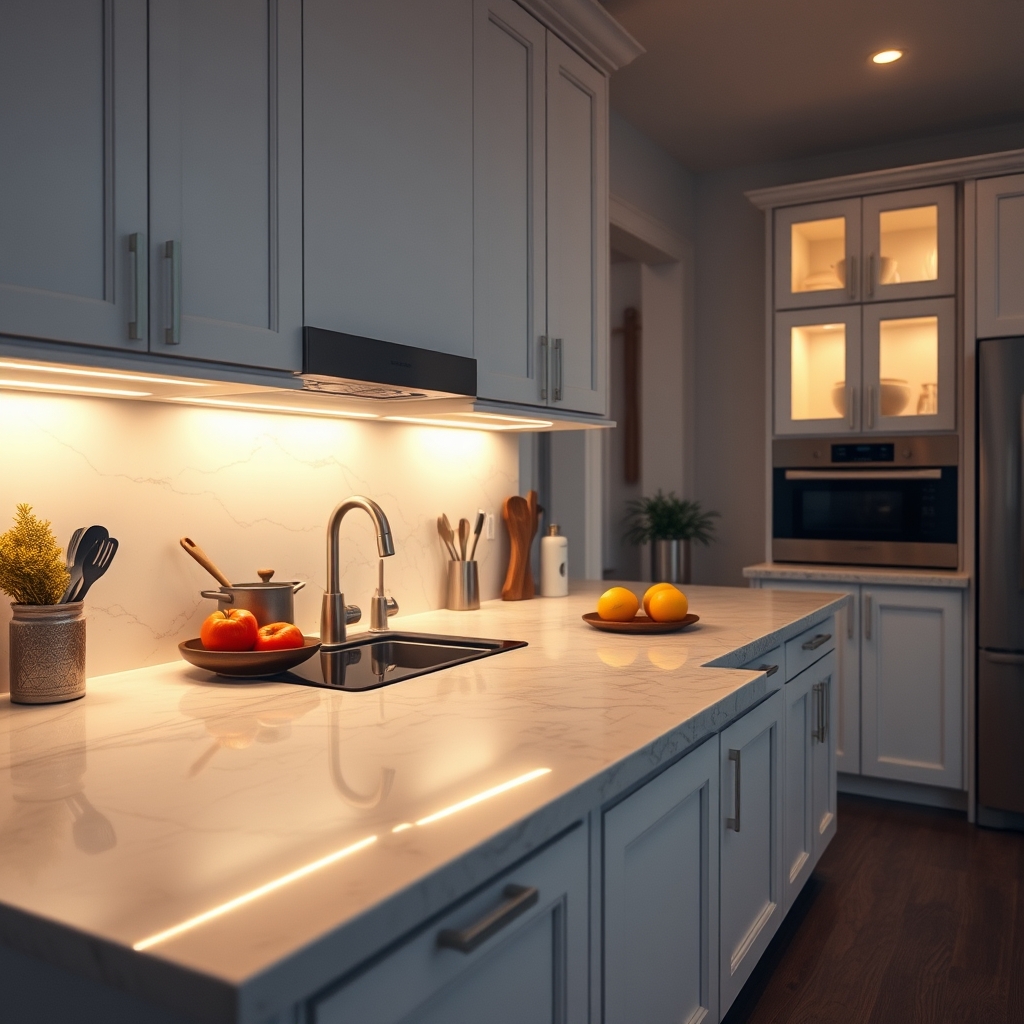
How much can kitchen LED strip lights save you? According to the Department of Energy and various studies, LED strips use substantially less electricity than incandescent bulbs and vastly outlast both incandescent and fluorescent options (Bob Vila). Typical LED strips save up to 45% in energy usage versus traditional puck lights or bars—which translates to tangible reductions in power bills. Their service life routinely exceeds 20,000 hours, which means you might never replace them during your ownership.
Real-World Example: Replacing 8 feet of halogen puck lights (120W total) with 8 feet of LED strip (20W total) saves about 100 watts whenever the lights are on. Used 3 hours per day, that’s 0.3 kWh saved daily, or about $30–$40 per year at $0.30/kWh. The ROI is visible in under two years, even before factoring in longer lifespan or lower replacement cost.
For more actionable home energy upgrades see our net-zero guide for practical tips on efficient living.
Cost Comparison — Upfront vs Operating Costs
Here’s how popular under cabinet lighting options compare in real cost and payback:
| Type | Upfront Cost | Estimated Lifespan | Energy Use | DIY Friendly? |
|---|---|---|---|---|
| LED strip/tape | $20–$50/linear foot | 20,000+ hrs | ~2–5W/foot | Yes (plug-in); Some hardwire units require an electrician |
| Puck lights | $10–$30 each | 5,000–10,000 hrs | ~10–20W each (incandescent); 2-6W (LED) | Moderate |
| Light bars | $30–$60/bar | 15,000–30,000 hrs | ~8–15W each | Yes |
| Fluorescent | $15–$40/fixture | 7,000–15,000 hrs | ~10–18W/foot | Moderate |
Based on these numbers (Angi cost report), LED strips are slightly higher upfront but cheaper by far to run. Payback, even with pro installation, often occurs in less than three years, and faster with DIY—especially if you already have accessible outlets.
Looking for other incremental ways to boost kitchen value on a budget? Explore peel and stick backsplash options for fast, cost-effective upgrades.
Common Installation Challenges & Homeowner Complaints (and how to avoid them)
Not every install goes smoothly. Here are the issues most homeowners run into—plus the proven fixes:
- Wiring/cable routing headaches: LED strips need power, and ignoring clean cable routes causes visible wires. Solution: Plan your cable path and measure before mounting. Concealed or in-cabinet power supplies deliver the cleanest look (community feedback).
- Mounting method match: Adhesive strips are ultra-easy for plug-and-play installs. For hardwire or smart home integration, expect to drill and possibly hire an electrician, as confirmed by PacLights.
- Glare, shadows, and “dead spots”: Strips mounted too far back illuminate only the backsplash, not your actual workspace. Solution: Mount close to the front cabinet edge for smooth, even counter coverage (Soul LED).
- Poor CRI/color from cheap kits: Low-quality strips misrepresent food and decor colors. Always specify “CRI 90+” for clarity and accurate color rendering.
- Smart-home headaches: Not all strips play nicely with Alexa or Google. Confirm integration before you buy—or select a system with its own app instead.
For more guidance on smart home upgrades and navigating pitfalls, our smart thermostat installation guide covers similar integration challenges and solutions.
Placement & Optical Best Practices for Task Lighting
The most common placement mistake with under cabinet lighting is mounting the strip too close to the wall. This lights up the backsplash, but leaves your working area in shadow, totally undercutting kitchen function (see analysis). The fix: always position LED strip lights near the front cabinet lip—1–2 inches back—so light falls evenly over the counter.
If you’re using diffusers, install them to soften hot spots and spread light more uniformly. Avoid placing lights over seams, gaps, or with large interruptions, as this creates uneven illumination and shadows right where you chop, wash, and prep.
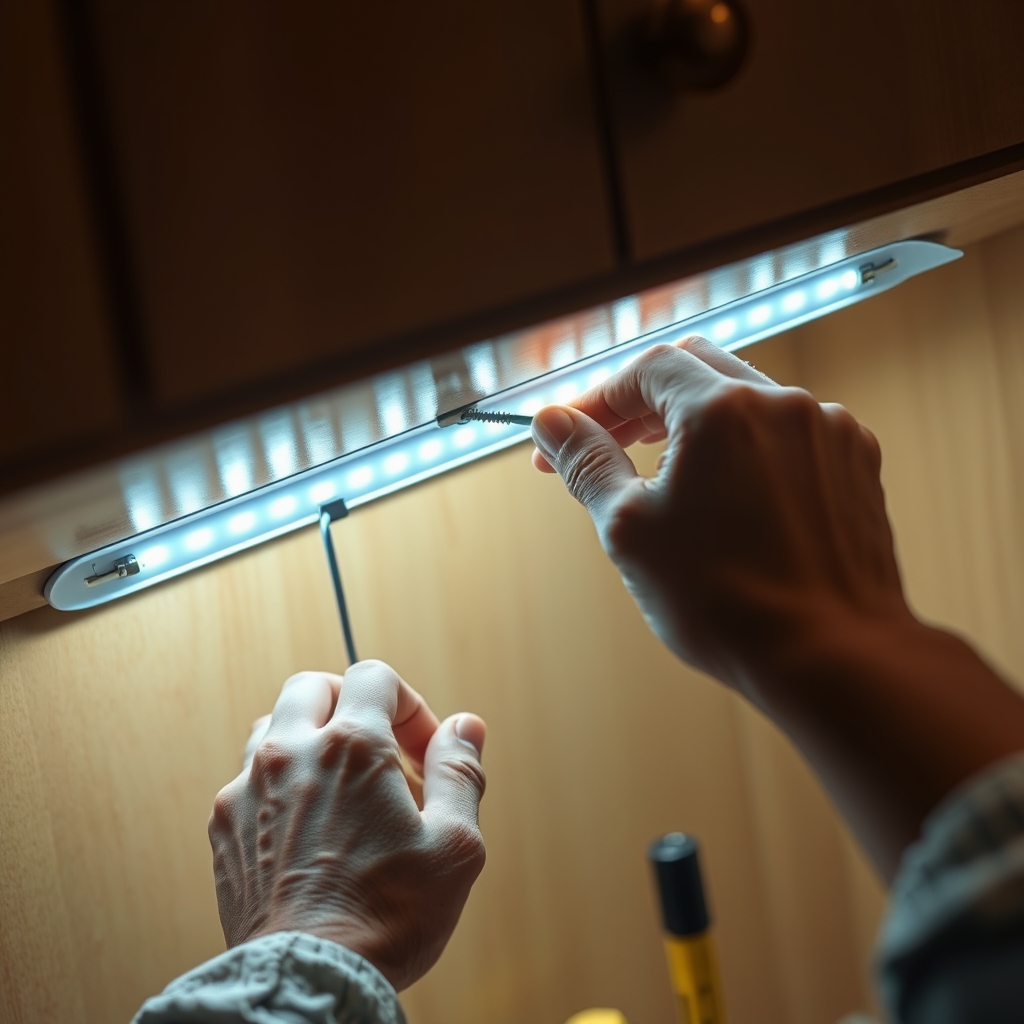
Layered lighting (using both under cabinet and overhead fixtures) ensures there’s enough vertical separation for both ambiance and dedicated task lighting. For kitchen designers, this is considered “best practice.” For more kitchen ambiance upgrades, see our deck lighting ideas for seamless transitions to outdoors.
Top 3 Under Cabinet LED Kitchen Lighting Ideas Missing from Competitors
Most DIY kitchen lighting guides skip over these powerful upgrades:
- Tunable and customizable color: Seek LED strips with “tunable white” and RGB accent features. You can switch from focused cooking light (4000K-5000K) to relaxing ambient scenes (2700K) or even add splashy color for parties. Kits like these are rare but rapidly gaining demand with homeowners and designers (see market report).
- Advanced dimming & scene control: Invest in strip kits that support smooth, flicker-free dimming as well as smart home integration. Multi-zone dimmers let you separate island, sink, and main counter runs for professional-level lighting scenes.
- High-CRI, layered lighting, and diffusers: Require a CRI (color rendering index) of 90+ so food and surfaces appear true to life. Pair with optical diffusers for a continuous, “professional kitchen” look.
Most kits ignore these points. Insist on spec sheets and supplier documentation before ordering. For layered lighting strategies across your home, check out LVP flooring options that reflect light beautifully and suit illuminated kitchens.
DIY vs Professional — When to Call an Electrician
Kitchen under cabinet lighting is one of the best DIY upgrades—if you stick to adhesive-backed, plug-in kits or battery options. Most modern LED strips are designed for this type of straightforward installation (PacLights).
But if your vision includes:
- Power routed behind walls or through cabinets
- hardwired power supplies (no visible cords)
- Smart-home scene hubs (multi-zone scenes, app or voice control)
- Code-compliant upgrades with GFCI protection or lighting circuits
—then you’ll save time, money, and headaches by hiring a licensed electrician.
Quick checklist for DIY: Plug-in, low-voltage, and stick-on kits. If in doubt or wiring is complex, always call a pro.
Buying Checklist & Spec Sheet (What to specify when ordering)
Avoid mismatched lighting and failed installs by collecting these specs for any kitchen LED strip lights purchase:
- Watts per foot: Typical range is 2–5W/ft
- Lumens per foot: At least 200–400lm/ft for functional task lighting kitchen solutions
- CCT (color temperature) range: 2700K (warm) to 5000K (cool/task)
- CRI: 90+ recommended for accurate color rendering of food and finishes
- Dimming compatibility: Confirm with dimmers or smart home systems
- Power supply type: Plug-in (DIY) or hardwired (pro install)
- IP rating: IP20+ is fine for dry kitchens; use IP44+ near sinks or moist zones
- Mounting style: Adhesive, brackets, or magnetic. Ensure surface prep for best adhesion
- Length/custom cuts: Strips must be cuttable at planned install points
- Warranty: Minimum 3 years typical with quality brands (Lumaz report)
For additional spec-driven purchases or engineered upgrades, see our smart pergola guide for more technical buying strategies that boost ROI.
Quick Installation Troubleshooting & Maintenance Tips
Issues still happen. Here are rapid fixes to the most common under cabinet lighting problems:
- Flickering or buzzing: Check driver or dimming compatibility. Some cheap dimmers won’t work with LEDs.
- Hot spots or strip “dots” visible: Add optical diffuser or opt for a higher-density LED strip (more LEDs per foot).
- visible wires: Plan cable routing before installation—conceal wires behind cabinets or use cable covers.
- Difficulty accessing future wiring: Use power supplies in easily reachable cupboards or drawers for future upgrades.
- Corners and cabinet gaps: Use factory connectors or low-profile jumpers to span gaps for a continuous look.
Homeowners regularly recommend mounting strips as close as possible to the front edge and dry fitting all hardware before final installation—practical tips echoed by installers and the DIY community (LEDLightsWorld community).
Final ROI Summary + Next Steps (Call to Action)
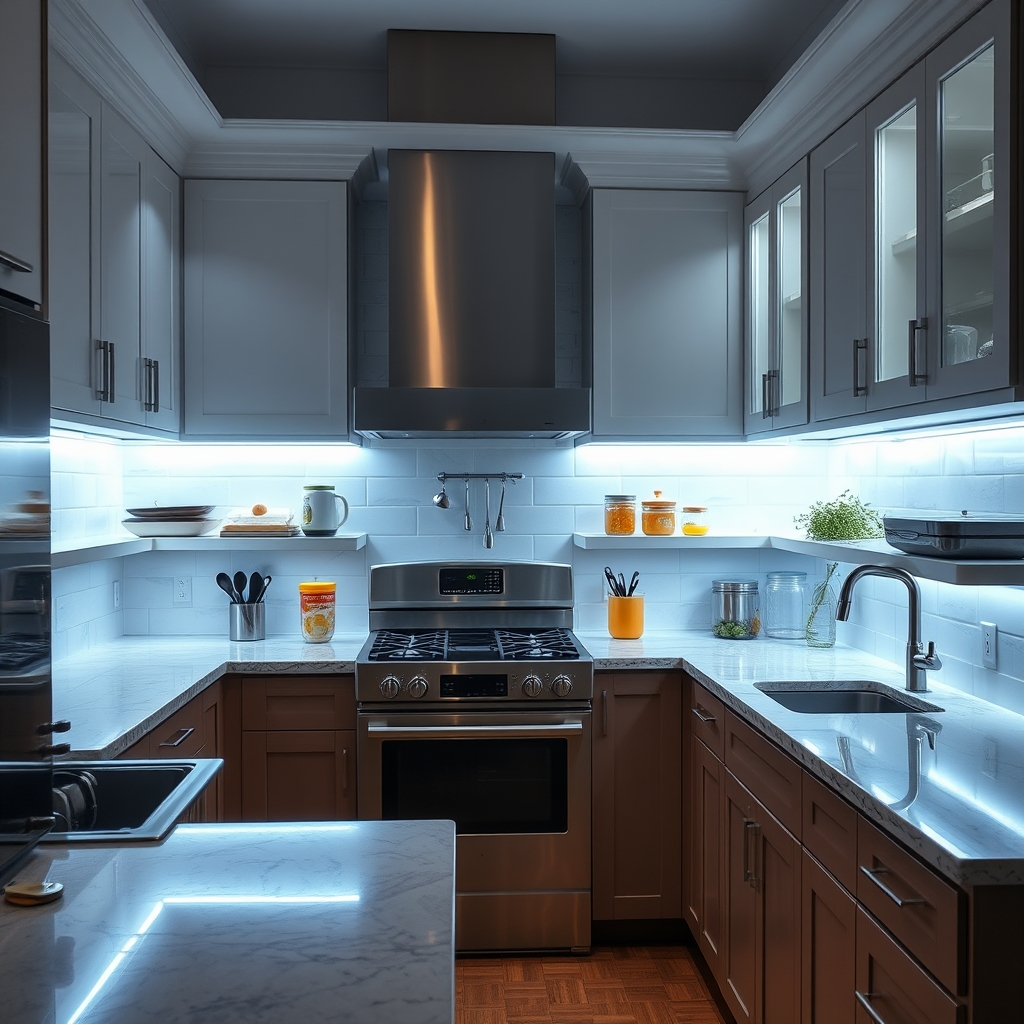
Upgrading to under cabinet lighting using kitchen LED strip lights is a practical investment, not an aesthetic luxury. Real-world data shows up to 45% energy savings, double- or triple-longer service life, and a real return on investment—often in under three years. The right design, careful placement, and well-chosen specs will ensure stunning results, lower bills, and a kitchen ready to impress at resale.
Ready for a lighting upgrade that pulls triple duty—energy savings, comfort, and resale value? Start with our downloadable spec checklist, or ask a question below. For complete home upgrade strategy, see our guides on energy-efficient fixtures and outdoor kitchen design for even more ROI.
Make your under cabinet lighting count—choose LED, get it right the first time, and enjoy long-term savings and comfort in your kitchen.
FAQ Section
How long do LED under cabinet lights last?
Quality kitchen LED strip lights routinely last 20,000 to 50,000 hours—many years of use with minimal maintenance (source).
Is it better to DIY or hire a pro to install under cabinet lights?
For simple plug-in or adhesive kits, DIY installation is practical and safe. But for hardwired lights, in-wall power routing, or smart-home scene integration, hire an electrician for code-compliance and safety.
What’s the best position for under cabinet lighting?
Place LED strips near the front cabinet edge, about 1–2 inches back, to avoid shadows on the counter and prevent backsplash glare (Soul LED).
Do LED kitchen lights really save that much energy?
Yes. Swapping old puck or fluorescent lights for LED strips can cut energy use by up to 45% and lowers your electricity bill, with short payback periods in most homes. DOE and other studies confirm energy and lifecycle benefits.
Can I combine under cabinet lighting with other kitchen lighting?
Absolutely. Layered lighting (pairing under cabinet, overhead, and even toe-kick lights) boosts both function and ambiance. Just ensure all sources have compatible color temperature and CRI for the best results.
—