

Table of Contents
Home EV charger installation is one of the smartest upgrades for homeowners making the switch to electric vehicles—but it can be expensive, complex, and full of potential gotchas if you’re not prepared. This direct guide spells out realistic costs, critical line items to demand in quotes, and the 2025 safety features no one tells you about. If you value cost clarity and protection from unpleasant surprises, read on.
Key Takeaways
- Expect Level 2 home EV charger installation to cost $3,000–$5,000 on average in 2024.
- Always demand a line-item breakdown: hardware, labor, permits, and electrical panel work.
- For 2025, insist on chargers with advanced safety protections and smart grid readiness to futureproof your investment.
Quick answer — What does home EV charger installation cost in 2024?
The total EV charger cost for home installation in 2024 usually ranges from $3,000 to $5,000 for a standard Level 2 setup. This broad range comes from three main factors: the complexity of your installation, local permit requirements, and whether your electrical panel needs upgrading. Simple jobs cost less, but panel upgrades or long wire runs can quickly add thousands. [Source]
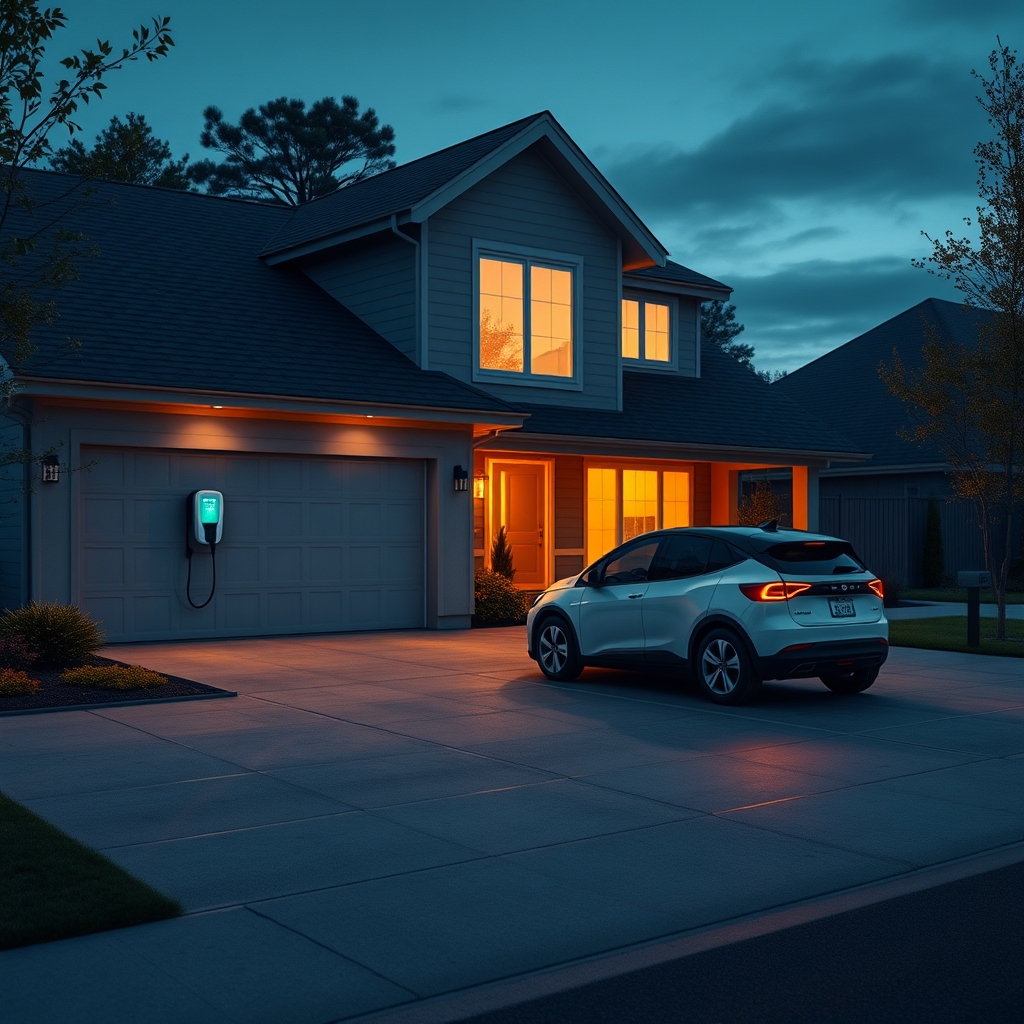
Cost breakdown — hardware, labor, permits, and potential panel work
Get a detailed quote in writing. The only way to avoid surprises is to demand a line-item breakdown. Here are the main components every level 2 EV charger install cost quote should include:
- Charger hardware ($400–$1,200): Wall-mount Level 2 unit, usually 32–48A. Look for Wi‑Fi and app features if desired.
- Wiring or hardwire install ($300–$800): 240V outlet or hardwired circuit from your main panel, including mounting and basic conduit.
- Electrician labor ($400–$1,200): Site check, install, setup, testing, walkthrough, and travel. Rates vary widely by region.
- Permit & inspection fees ($50–$300+, some cities higher): Permitting is required almost everywhere. Some cities charge over $500. Make sure you know who handles this step.
- Panel/service upgrade (if needed) ($1,500–$3,000+): For most homes, this is only needed if your panel is maxed out or undersized for EV loads.
Always insist on seeing these specific line items before signing any contract. Leaving any out can result in large, unexpected add-ons. For an even deeper dive into individual cost components, check out our detailed electric car charger installation cost breakdown.
Regional pricing expectations — what people pay by region (2024)
Where you live has a major impact on your EV charger installation near me costs. Regional labor rates, permit costs, and even local code strictness create major swings. Here are reference totals based on recent deployed study data:
- California / West Coast: Installs often $2,000 to $3,000 for standard cases. CA average $4,148 (includes higher labor and permit costs). [Read study]
- Midwest & South: Most common range $1,000–$1,800—lower labor and more flexible codes.
- East Coast metros: Typically $1,500–$2,200. Densely regulated areas trend higher.
Example: In San Diego, total project fees (hardware, labor, permits) were tallied at around $4,100, while a similar job in Atlanta came to $1,700. Always check what your neighbors pay and never compare bid prices without seeing what’s covered. For more on regional costs, explore our level 2 EV charger install cost guide.
Common homeowner frustrations after hiring installers (real problems and how to avoid them)
Even proactive homeowners hit headaches when installing EV home chargers. The most common complaints are:
- Delays due to permits, utility waits, or electrician scheduling.
- Hidden fees—for example, panel upgrade or trenching not quoted upfront.
- “Scope creep” where new work is “discovered” mid-process.
- Lack of permit handling: Some installers quote hardware and labor but make you manage the permit; this sometimes voids warranties and causes inspection issues.
- Installer pushes for larger scope: Upselling to panel upgrades or bundled work not clearly justified.
How to avoid: Get every detail in writing, know your panel’s true capacity, and always verify who’s responsible for permits/inspections. For real homeowner experiences and tipoffs, check our article on home EV charger permit tips.
Permits, inspections & timeline — the admin you can’t ignore
Almost every US city and suburb requires formal permitting for home EV charger installation — it’s non-negotiable. Permit fees typically run $50–$300 (some cities over $500). The permit must be pulled by a licensed electrician, who is then responsible for code compliance and final inspector walkthrough.
If your panel needs a full service upgrade (raising from 100A to 200A), utility coordination is essential and this process can add 2–4 weeks and $2,000–$5,000+ to the total job. Installation timelines range from same day (simple) to 2–6 weeks with upgrades. Always ask up front: “Will you or I be pulling the permit? What’s the timeline for each step?” Learn more about the permit process in our full garage charger installation guide.
What most guides miss — critical 2025 safety features & smart-grid readiness
Most published guides still focus on 2022–2023 features, not what’s about to matter in 2025. Consider this a safety and futureproofing checklist for the best home EV charger 2025:
- Advanced ground-fault and thermal protection: Avoids fire/electrocution risks—demand UL listing for new smart chargers.
- Automatic load management (ALM): Prevents overloading your panel. Essential for homes running multiple high-draw appliances.
- Anti-islanding & secure OTA firmware: Prevents shock/electrical hazard during power outages and ensures critical security updates in the charger’s software.
- Smart grid/DR compatibility: Needed for future home energy management and participation in utility programs. Look for OCPP or utility integration support now.
- V2H/V2G readiness (Vehicle-to-Home/Vehicle-to-Grid): Only a few chargers support this yet, but expect rapid growth.
Make these a required part of any best home EV charger discussion and you’ll avoid expensive replacements later. See the spec lists in our Level 2 charger install cost breakdown.
Choosing the best home EV charger for 2025 — features checklist
Pick your charger by mapping realistic needs to hardware tier. For almost all homeowners, these are the must-have features:
- Amps (32–48A adjustable current): Ensures fast charging, but the right amp rating depends on your car and panel.
- Wi‑Fi/app + scheduling: Control charging remotely and set schedules for lower utility rates.
- Load management & multiple charger networking: For homes with more than one EV or large appliances.
- OCPP/utility DR program support: Needed to participate in rebate and demand response programs.
- Warranty (minimum 3 years) & UL listing: Absolutely non-negotiable for insurance and safety.
- Physical durability: For garages (extreme cold/heat) or exposed outdoor mounting.
Most charger hardware falls in the $400–$1,200 range; get price quotes that break down what’s actually included. See our guide to picking the best home EV charger 2025 for a decision tree and side-by-side feature chart.
How to hire an electrician — exact quote checklist & red flags
The best way to protect yourself from cost overruns is a written, four-part quote:
- Base installation (hardware, wiring, labor)
- Permitting and inspection (who pulls it, how much is it)
- Panel/service work, only if required (with upfront cost estimate or “N/A” if not needed)
- Any extras (trenching, unique site features, or bundled work)
Red flags to watch for:
- No clear permit process or “we’ll see after we start” on panel capacity.
- Quotes that combine everything into one line—makes surprises more likely.
- No references or unwillingness to explain the testing/final walkthrough plan.
Ask for a firm timeline and confirmation that warranty testing will be included. For more detailed steps, check our dedicated section on EV charger installation near me.
Sample scenarios & representative quotes (simple vs mid vs complex)
What should you actually expect in real life? Here’s what 2024 quotes look like for three situations:
| Scenario | What’s Included | Typical Total |
|---|---|---|
| Simple Install Charger next to main panel, breaker available | Charger, 240V outlet, labor, basic permit | $700–$1,800 |
| Mid-Complexity 20–30 ft conduit run, light panel tweak | Charger, 30ft wiring, additional breaker, permit | $1,800–$3,000 |
| Complex Panel or full service upgrade, possible utility coordination | Charger, new 200A panel, permit, utility fees | $3,800–$5,500+ |
Most homeowners will fall into the first two buckets, with overall “installed” rates around $2,500–$3,000 being typical. Panel and service upgrades push the top end considerably higher. Want more scenario examples? Visit our cost by scenario deep-dive.
Cost-saving moves, incentives & rebates to check before you buy
Lowering your EV charger cost for home is often possible with a few smart moves:
- Buy your own charger during off-season or holiday sales and supply it to your electrician.
- Bundle projects: Combine EV install with other electrical work to share permit/touch fees.
- Request installer minimize trench/run/conduit cost: Shorter, surface-mount conduit can cut labor hours.
- Apply for state/utility rebates: Find both direct and aggregator program rebates (these can save $200–$900 in some states). Resources like this overview explain how.
- Ask about bundled permits: Some cities allow a single permit for “panel + EV install,” saving you on admin costs if you time it right.
- If a panel upgrade is truly unavoidable, schedule it only after you’ve confirmed it’s required—don’t rely on an installer’s “recommendation” alone. For a deeper explanation see this neutral breakdown.
Final checklist & next steps (ready-to-send to electricians)
When you’re ready for quotes, copy/paste this list directly to each electrician:
- Include clear site photos (electrical panel, parking location, area for charger install)
- State your desired charger brand/model or at least minimum amp/features
- Name the expected parking spot for the EV (garage, driveway, etc.)
- Provide an accurate count of available panel slots or overall panel rating
- Request a clear four-part quote: (1) base installation, (2) permit/inspection, (3) panel/service upgrade (if needed), (4) extras
- Ask for a realistic timeline and who is responsible for pulling permits
- Request confirmation of warranty and what post-installation test will be done
Remember: Average Level 2 home EV charger installation costs in 2024 land between $3,000–$5,000. Use this as your benchmark and push back on vague or inflated quotes. For a deeper dive on hiring best practices, explore our resource on EV charger installation near me.
Conclusion
Transparent home EV charger installation is about putting all costs and responsibilities in writing, double-checking your home’s capacity, and demanding both state-of-the-art features and basic regulatory safety. Always compare detailed, line-item quotes and use buyer-checklists to avoid “scope creep,” surprise panel work, and missed rebates. With the right research, you’ll get the safest, smartest, and most futureproof install for your money. Ready to power up your EV at home? Get your real quotes lined up, start the permit clock, and demand that every promised feature for 2025 makes it on your contract. Don’t settle for less on your next home EV charger installation.
FAQ: Home EV Charger Installation
How much does it really cost to install a Level 2 EV charger at home?
Most homeowners in 2024 pay between $3,000 and $5,000 total. The range can be lower for simple installs and much higher if a panel upgrade is required.
Can I install a home EV charger myself?
No—building codes require that a licensed electrician handle Level 2 installs, pull the required permit, and see the job through inspection for safety and insurance reasons.
What safety features should I demand in 2025?
At minimum, require advanced ground-fault and thermal protection, secure firmware updates, load management, smart grid readiness, and UL certification.
What can make my install “complex” and expensive?
Panel upgrades, long wire runs, hard-to-access panels, or strict local code/permit rules can quickly add thousands. Always confirm your electrical panel’s capacity first.
Are there rebates or incentives that help with cost?
Yes! State, city, and utility rebate programs are offered in many areas—sometimes bundling permit fees or hardware discounts. Search your state’s energy website or utility rebate page before hiring an installer.
—