

Table of Contents
Outdoor kitchen design has become one of the most ROI-positive investments for homeowners who love entertaining and want both functionality and boosted resale value. But not all outdoor kitchens deliver the same value—especially when mistakes or over-customization set you back. Here’s exactly what to plan for in 2024, how to side-step hidden pitfalls, and which tips the top blogs miss.
Key Takeaways
- Average built-in outdoor kitchens cost $5,000–$40,000, with ROI typically between 55%-70%—permanence and completeness drive value.
- DIY projects often underestimate hidden tasks like utilities and permits. Smart planning and pro help for gas, drains, or electrical curb regret and overages.
- Strategic layout and material choices prevent crowding, optimize workflow, and ensure longevity, directly improving resale and daily usability.
Why an outdoor kitchen design pays off in 2024
Outdoor kitchen design, when well-planned, is still holding its place as a top home upgrade for ROI and lifestyle in 2024. On average, a built-in outdoor kitchen runs $5,000 to $40,000 (most falling near $16,400 per HomeAdvisor) and typically returns 55%–70% of its value at resale. According to the National Association of Realtors, 83% of agents say outdoor kitchens are a most-wanted feature for buyers. The key? Complete, permanent installs (think built-in appliances, professional finishes, utilities) appraise higher than plug-and-play grills or cheap modular units. Upfront planning keeps expectations, spending, and value all on track—minimizing regret later.
Budget tiers — what to expect at Basic, Mid, and High price points
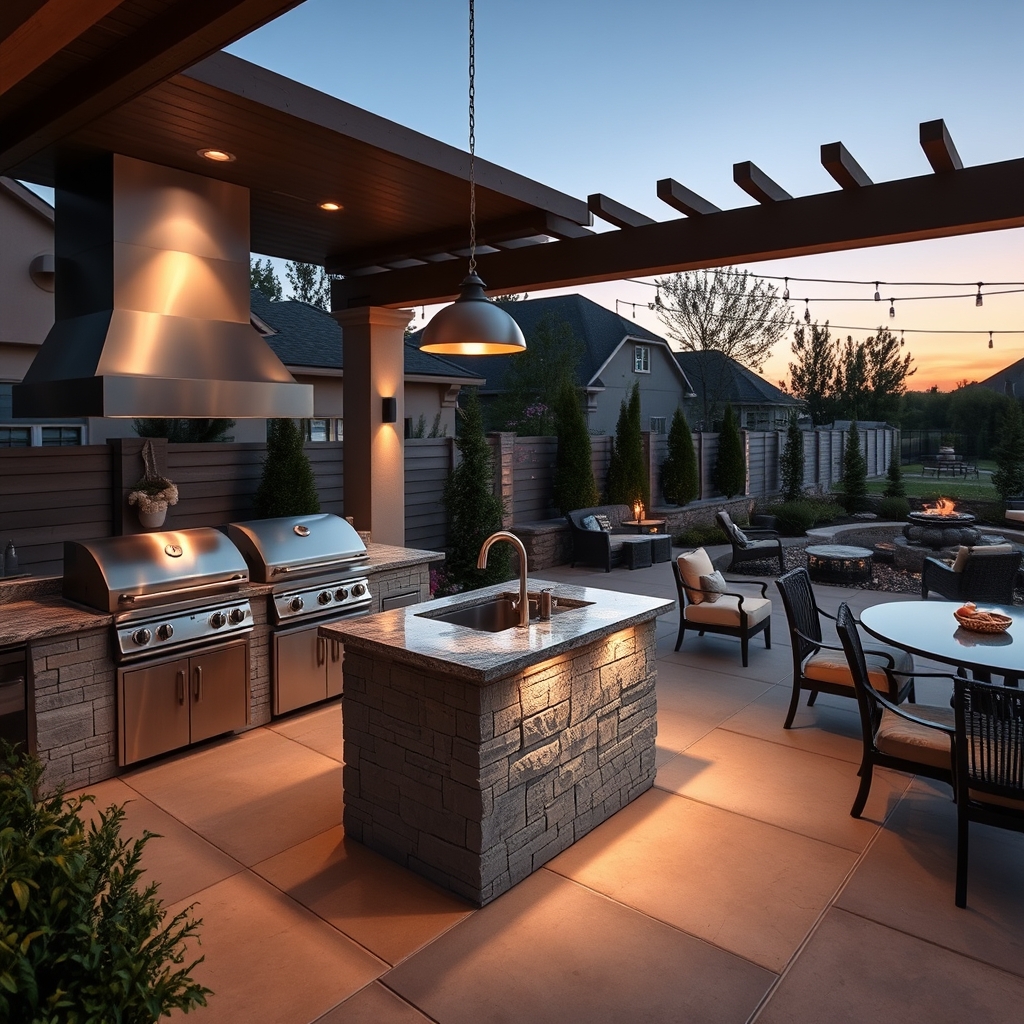
Every outdoor kitchen design starts with a budget—and knowing what’s realistic for your spend is half the battle. Here’s what each tier delivers and where to focus for ROI:
| Budget Tier | Features You Get | Pros | Cons | Best Value Moves |
|---|---|---|---|---|
| Basic ($5,000–$10,000) | Built-in outdoor grill, small counter, storage on existing patio | Lowest upfront cost, fast DIY install | Limited appliances, ROI closer to 50%, may feel “starter” | Invest in a quality built-in outdoor grill and weatherproof cabinets |
| Mid-Range ($10,000–$20,000) | Grill, sink, undercounter fridge, stone or concrete counters | Full outdoor cooking, looks permanent, higher buyer appeal | Requires professional help for utilities, larger footprint | Upgrade to stone counters, choose a durable fridge and sink |
| High-End ($20,000–$40,000+) | Custom masonry, premium grill, oven, AV, bar seating, lighting | Ultimate wow factor, highest appraised value, lasting finishes | Significant cost, may not recoup all spend in some markets | Prioritize grill, layout, and built-in weatherproof features |
For maximizing property value through landscaping and design, consider pairing functional outdoor kitchens with sustainable features. Always budget an additional 15% for permits and utilities—these are the hidden costs that disrupt most DIY outdoor kitchen projects.
Built-in outdoor grill — why it matters and how to choose one
A built-in outdoor grill is the heart of every serious patio kitchen. Compared to stand-alone grills, built-in options deliver real permanence, drive higher resale, and eliminate the clunky look that dates your space. Why do savvy owners (and appraisers) care?
- Durability: Top built-in outdoor grill models—especially those in 304-grade stainless—stand up to years of sun and rain (see EXT Cabinets). Many last a decade or more with care.
- Integration & Workflow: Fit seamlessly with counters and cabinets, boosting both function and appearance.
- Sizing: For regular entertaining, aim for a grill 34-42″ wide (typical 60–80K BTUs). Allow 3 feet of clearance in front and 2+ feet to either side for prep and safety.
- Ventilation: Always vent built-in grills for safety—an area missed by most DIYers.
Brand attributes to watch for: corrosion-resistant construction, insulated walls, reliable burner systems, and good warranty support. Invest here, even if you scale back on decorative finishes elsewhere.
Top DIY outdoor kitchen pain points — and how to avoid them
Many homeowners run afoul of outdoor kitchen cost or code issues because they underestimate complexity—or don’t know when to bring in pros. Here are the most common DIY outdoor kitchen pitfalls, and how to sidestep them for less regret:
- Utility Surprises: Gas lines and extra electrical can easily add $1,000–$5,000. Always get a utility locate and call a pro if you’re unclear.
- Poor Drainage/Weatherproofing: Water damage and rust are the most frequent post-build issues. Use waterproof cabinet systems and slope counters away from the house. Consider upgrading to WaterSense fixtures for long-term water management.
- Spacing Errors: Poor grill clearances are common and risk both safety and insurance problems. Stick to clearances above.
- Permit Oversights: Even small DIY outdoor kitchen projects often need city or HOA approval. Budget up to $500+ and weeks of lead time.
- Wrong Material Choices: Indoor cabinet or appliance choices fail fast outside. Don’t risk it—outdoor-rated gear is worth the price.
Many DIYers report cost overruns of 20%–40% due to these hidden issues (details at BBQGuys). A typical material/labor split: For a $15,000 project, expect about 60% materials ($9,000), 40% pro install/utilities ($6,000).
Missing design insight #1 — maximizing space and workflow
Most blogs gloss over the keys to squeezing pro-level functionality into realistic patio spaces. Here’s how to use spatial strategy and work zones to get more value out of your outdoor kitchen design:
- Work Triangle Adaptation: Place grill, sink, and fridge in a loose triangle—keep at least 4 feet between each for easy movement. For smaller patios, two zones (prep & cook) often work better than a full triangle.
- Minimum Clearances: Always allow 3 feet in front of grill, 2 feet on each side, 24–30″ for walkways, and at least 24″ for bar seating backs.
- Prep & Plating Zones: Allocate an unbroken 24–36″ counter near the grill for safe prep. Opt for at least 16–20″ deep counters if space is tight.
- Storage & Integrated Seating: Use deep drawers and vertical cabinets to reduce clutter. Add bar seating on the “far side” of the island to avoid crowding the cook.
For more ways to enhance your home’s outdoor appeal and seamless workflow, check out our guide on biophilic outdoor design.
Missing design insight #2 — modular vs permanent systems and ROI implications
Should you pick prefabricated outdoor kitchen modules or invest in a full masonry build? Both have pros and cons for ROI and maintenance:
| Modular/Prefab | Masonry/Permanent |
|---|---|
|
|
| Cons: Lower ROI, limits on pro appliances, can look temporary | Cons: Higher cost, longer build, not easily moved |
Choose modular only if you may move or want phased upgrades. For maximizing ROI, permanence (custom masonry, built-in appliances) should be your aim—especially if resale is a priority. See our durability guide for related investment insight.
Patio kitchen layout templates and backyard grill station ideas (with sample footprints)
Not sure where to start with your patio kitchen layout? Here are four proven templates with critical dimensions, features, and best-fit advice. (Editor: Insert vector diagrams of each.)
- Small Island (8×4 ft footprint): Built-in grill, compact sink, 36″ prep counter, undercounter storage. Best for tight patios. Min. 3 ft walkway clearance around.
- L-Shape (10×8 ft): Grill, fridge, sink on one leg, perpendicular bar seating on the other. Good for corner patios, serves 4–6 with room for pass-through.
- Linear Against Wall (12×3 ft): Easy to install on existing patios. Grill, prep, undercounter fridge/sink in a row. Great for slim spaces, but limited on social flow.
- U-Shape with Bar (12×9 ft): The “indoor kitchen outdoors.” Stations for grill, fridge, sink, and seating. Demands more space and bigger budget but delivers premium feel. Industry average cost for a mid-size outdoor kitchen like this: about $16,400 (HomeAdvisor).
Material tip: Blend stone, sealed concrete, or porcelain counters with high-grade stainless appliances for lower long-term maintenance. Need inspiration for creating flexible gathering zones? See our backyard pool and outdoor living series.
Materials, appliances and weatherproofing — choices that protect value
The most successful outdoor kitchens will age beautifully if you pick the right materials and appliances for your climate. Here’s what to look for:
- Stainless Matters: Prefer 304-grade stainless for any built-in outdoor grill or fridge. 430-grade rusts sooner. Go marine-grade (316) near saltwater.
- Cabinets: Skip wood or MDF. Modern weatherproof cabinets systems (PVC, powder-coated aluminum) withstand all conditions.
- Counters: Porcelain slabs are king for heat, stain, and freeze resistance; sealed concrete or stone are solid runners-up. Avoid porous or glossy tiles outside.
- Spending Priorities: Invest most in grill, cabinets, and weatherproofing. Save on trims, backsplashes, and non-structural details.
The right choices here keep maintenance low, looks sharp, and ROI high. For homeowners interested in ongoing ROI from other energy and water upgrades, see our WaterSense fixtures guide.
Permits, utilities, maintenance and hidden costs checklist
Every outdoor kitchen design carries hidden costs—especially for utilities and local codes. Don’t get caught off guard. Use this practical checklist:
- Permits: Contact your municipality or HOA early. Budget $250–$1,500 depending on complexity.
- Utilities:
- Gas/Electric: Trenching, new circuits, and shutoffs add $1,000–$4,000.
- Drainage: Slope patio, add French drains if needed ($500+).
- Lighting: GFCI outlets, dusk-to-dawn outdoor fixtures keep usage easy and safe.
- Structural: Slab or deck reinforcement (for heavy masonry) may cost $500–$2,000.
- Delivery: Large appliances might require crane service ($300+).
- Order of Operations: 1. Design & budgeting —> 2. Permits —> 3. Rough-in utilities —> 4. Counters/appliances —> 5. Finishes.
For printable checklists and cost guides, request our free one-page “Outdoor Kitchen Hidden Cost & Permit Checklist” below. For more property improvements that boost equity and comfort, check out net-zero home strategies.
Estimating ROI for YOUR market + next steps
Want a realistic sense of ROI on your outdoor kitchen design? Here’s a quick estimator that works in any market:
- 1. Call 2–3 local realtors. Ask: How much are buyers in your area willing to pay for a home with a complete outdoor kitchen? Is it seasonal or year-round demand?
- 2. Use this formula: [Projected project cost] x [expected recoup rate, typically 55%–70%]
- 3. Adjust for climate: Projects in sunbelt states can see higher ROI (up to 80%) due to year-round use. In colder climates, prioritize durable, maintenance-free designs.
- 4. Balance lifestyle vs. resale: If you plan to stay 5+ years, enjoy the upgrades fully; prioritize ROI if you may sell soon. For more on boosting property value, see our biophilic outdoor design tips.
Ready to put these best practices to work? Download our budget and permit checklist for your outdoor kitchen below or get at least three contractor bids before breaking ground. The right outdoor kitchen design lets you entertain better, boost home value, and skip costly mistakes.
FAQ
How much does a built-in outdoor kitchen really cost?
Most built-in outdoor kitchens land in the $5,000–$40,000 range, though the national average falls near $16,400. Premium builds with masonry and premium appliances can go higher.
What is the average ROI on an outdoor kitchen?
ROI typically falls in the 55%–70% range, with higher returns in warm climates. Permanence and completeness (built-in grill, sink, counters) yield better resale value.
Can I DIY an outdoor kitchen safely?
Many homeowners complete basic builds with a built-in outdoor grill and counters. Always hire licensed pros for gas, electrical, or plumbing, and budget for surprises like permits and utility extensions.
How do I weatherproof my outdoor kitchen?
Choose 304 stainless appliances, sealed counters (porcelain or concrete), and cabinets made for outdoor use (PVC or powder-coated aluminum). Regularly check seals and drainage.
What layout works best for small patios?
Compact island or linear wall layouts maximize space. Prioritize safe clearances (3 feet in front of grill), slimline appliances, and movable prep carts to keep walkways open.